
INSPIRION DSC Series
Overview of Differential Scanning Calorimetry (DSC)
Differential Scanning Calorimetry (DSC) is a fundamental thermoanalytical method extensively used for quality control of raw materials and finished products in the chemical and polymer industries.
It is also an indispensable tool in research and development for studying new materials and evaluating their behavior under controlled heating conditions.
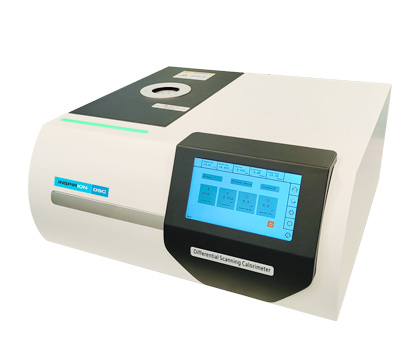
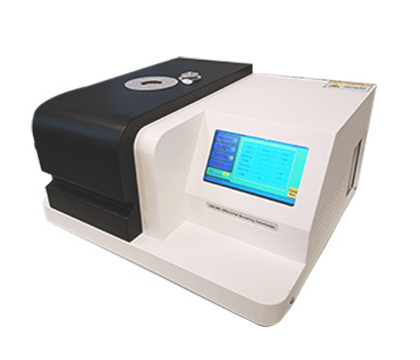
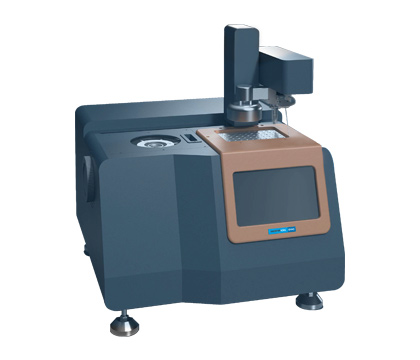
The Reliable and Universal INSPIRION DSC Series
Our company offers years of experience in supplying and providing methodological and service support for thermal analysis equipment. We present to you the accessible and versatile INSPIRION DSC analyzers, designed to solve a wide range of standard differential scanning calorimetry tasks. These instruments stand out for their operational and maintenance simplicity, as they contain no complex mechanical devices in their design. At the same time, the INSPIRION DSC analyzers are highly reliable and flexible for solving various analytical needs.
The INSPIRION DSC comes equipped with all the essentials for DSC analysis:
- A built-in automatic 2-gas controller for working with inert or oxidizing atmospheres.
- A high-sensitivity heat flow sensor.
- A multi-channel 24-bit ADC capable of registering even low-intensity signals.
- The ability to operate via dedicated Windows software or in a fully autonomous mode using the large touch-screen display and built-in ARM processor.
- Depending on your requirements, we offer analyzers in the following configurations:
- Air cooling (default) or optional thermoelectric cooling, with a standard operating range from approximately +25 °C to +550 °C.
- Liquid nitrogen cooling, providing an extended temperature range from -130 °C to +550 °C.
Key Technical Specifications
- Cooling System Air (default) / Thermoelectric* (option) Liquid Nitrogen (default)
- Temperature Range ~ +25 to +550 °C (Air) / -40 to +550 °C or -70 to +550 °C (Thermoelectric) -130 to +550 °C
- Heating Rate 0.1 – 100 °C/min 1 – 80 °C/min
- Cooling Rate 5 – 300 °C/min (Air) / 0.1 – 200 °C/min or 0.1 – 400 °C/min (Thermoelectric) 1 – 200 °C/min
- Temperature Resolution 0.1 °C
- DSC Signal Noise 0.01 µW
Advanced Solutions
INSPIRION DSC Plus and INSPIRION DSC Pro
For laboratories and researchers requiring capabilities beyond the robust foundation of the INSPIRION DSC, we offer two advanced lines: the feature-enhanced INSPIRION DSC Plus and the pinnacle-of-precision INSPIRION DSC Pro.
INSPIRION DSC Plus: The Enhanced-Functionality Model
The INSPIRION DSC Plus is engineered for laboratories that require greater flexibility, automation, and expanded analytical functionality. It is the ideal choice for solving more complex problems in material science, pharmaceuticals, and in-depth quality control. While retaining user-friendliness, the INSPIRION DSC Plus model integrates advanced features such as a more sophisticated auto-sampler for higher throughput, expanded gas control options for specialized atmospheres, and more powerful software suites for complex data analysis, kinetics studies, and advanced peak separation. This model serves as the perfect bridge between routine analysis and sophisticated research, offering extended capabilities without the complexity of a full research-grade instrument.
INSPIRION DSC Pro: The Research-Grade Precision Instrument
For the most demanding scientific research where exceptional data integrity is non-negotiable, the INSPIRION DSC Pro stands as our flagship instrument. This is a true research-class analyzer designed to deliver unparalleled measurement accuracy. Its defining characteristic is an exceptional calorimetric sensitivity that provides measurement precision up to the sixth decimal place. This ultra-high precision, achieved through a revolutionary sensor design, unparalleled thermal stability, and a proprietary signal processing system, makes the INSPIRION DSC Pro indispensable for fundamental studies. It is the instrument of choice for characterizing subtle phase transitions, measuring minute impurities, validating thermodynamic models, and any application where detecting the smallest thermal event with absolute confidence is critical.